Roman Formia: places and traces of ancient Formiae
A guide to connecting the museum, cisterns, villas, and funerary monuments without confusing documented history with tradition.

The Roman heritage of Formia is not concentrated in a single park. It is a network of places distributed along the ancient Appian Way, in the neighborhoods, and along the coast. To understand it, one must connect infrastructure, residences, museum collections, and funerary monuments.
The museum as a starting point
The sculptures of the National Archaeological Museum introduce the society and figurative culture of the ancient city. The visit helps to provide context to the remains that, outside, may appear fragmentary.
Water and city
The Cisternone of Castellone shows the scale of the works necessary for urban life. The cisterns of the Villa of Mamurra also remind us how central water management was in Roman residences overlooking the sea.
Memory and attributions
The so-called Tomb of Cicero is the symbol of the bond between the orator and Formia, but the name should be presented as a traditional attribution. Caposele and the remains incorporated in Castellone complete a picture in which archaeology and the contemporary city coexist.
Organizing visits
Not all sites follow the same access procedures. It is necessary to consult the Municipality and the Ministry of Culture, avoiding reporting hours or prices not verified at the time of departure.
This guide was written with the help of artificial intelligence from real sources, under the editorial responsibility of our team. Always verify times and details at the source. How we use AI
Related articles
More places, itineraries and advice selected by our editors.
Formia villages: Castellone, Mola and the Aurunci settlements
A territorial reading of coastal and hill historic centres, respecting distance and local life.
DiscoverFormia with children: realistic history and sea stops
A cautious way to alternate culture, open spaces and coast while accounting for steps, heat and distance.
DiscoverArriving in Formia: station, centre and port
Understand the main arrival hubs without treating indicative distances as guaranteed transfer times.
DiscoverWhat to see in Formia: places, districts and landscapes
A guide to Roman Formia, villages, coast and the Aurunci Mountains using verified place cards.
DiscoverEvents in Formia · November 2026
Verified calendar of events published by local sources. November 2026: 5 appuntamenti confermati da consultare prima della visita.
DiscoverThings to do in Formia this weekend: 10–11 October 2026
Il Dado della Terra in Santo Janni, «Tramonto è Musica» at the Villa of Mamurra with a free shuttle, the Cuba exhibition and the museum. Borgo di Vino is postponed.
Discover

_04.jpg)


Upcoming events
Verified dates and places to save for the next few days.
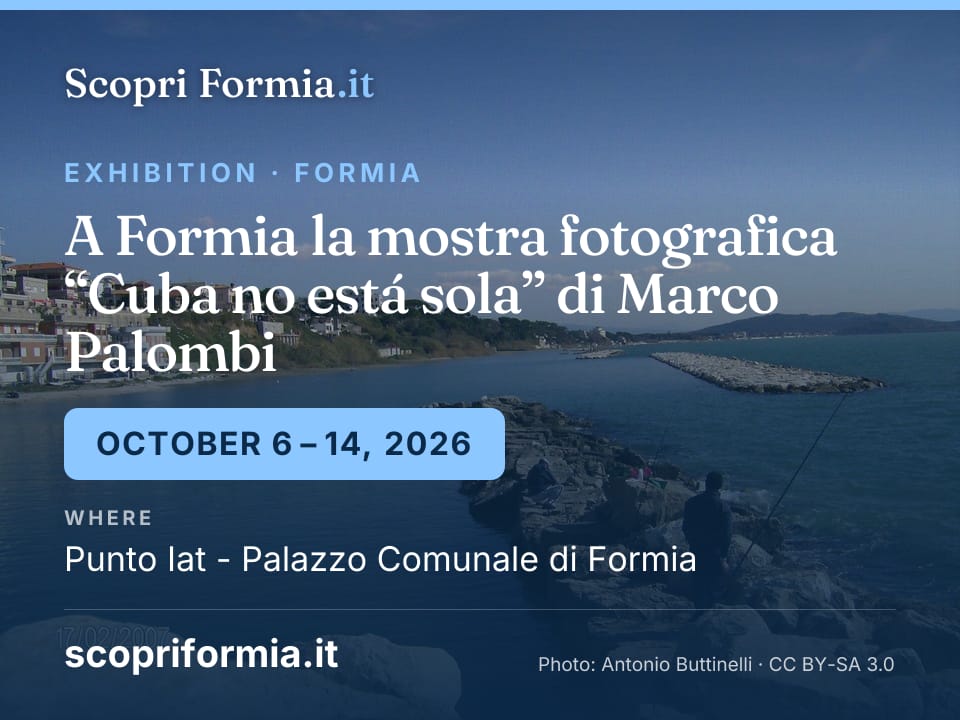
A Formia la mostra fotografica “Cuba no está sola” di Marco Palombi
A Formia la mostra fotografica “Cuba no está sola” di Marco Palombi is scheduled (October 6 – 14, 2026 · Punto Iat - Palazzo Comunale di Formia).
Discover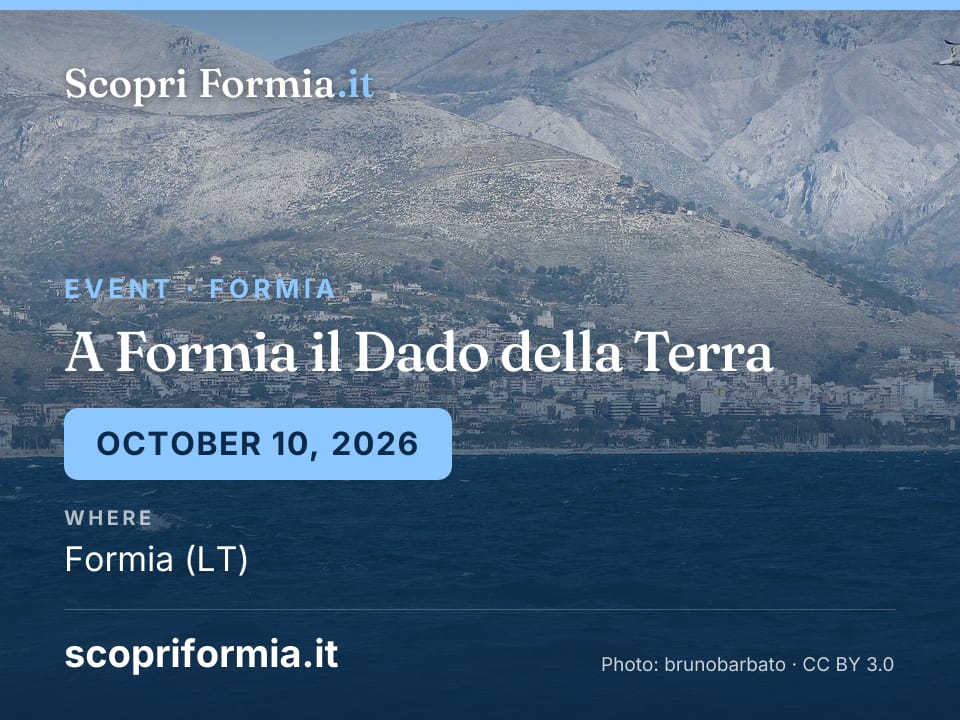
A Formia il Dado della Terra
A Formia il Dado della Terra is scheduled (October 10, 2026 · Formia (LT)).
Discover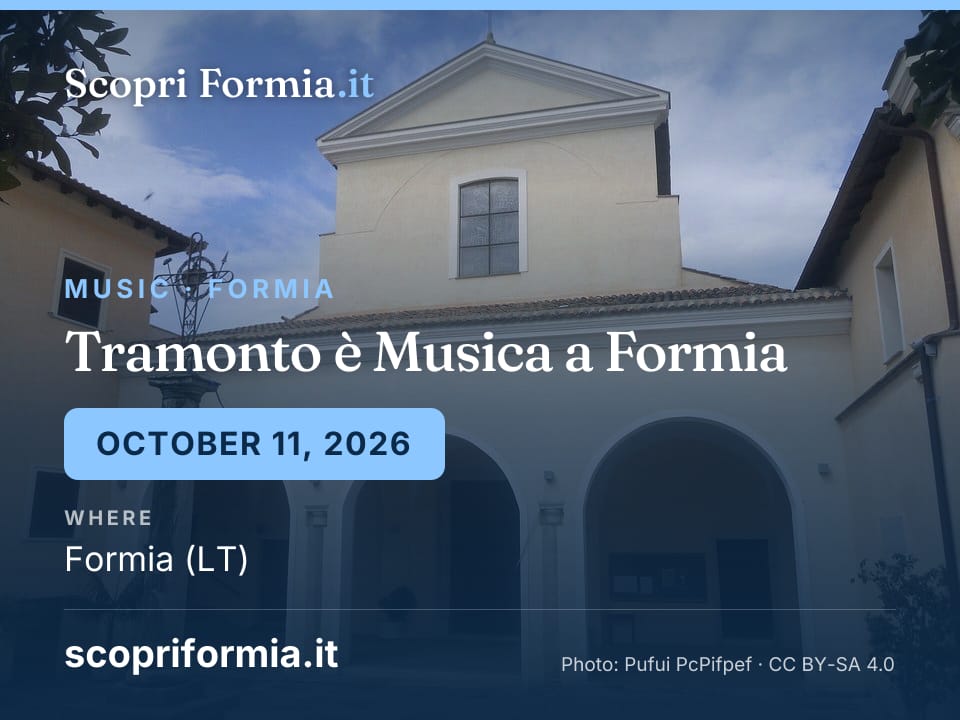
Tramonto è Musica a Formia
Tramonto è Musica a Formia is scheduled (October 11, 2026 · Formia (LT)).
Discover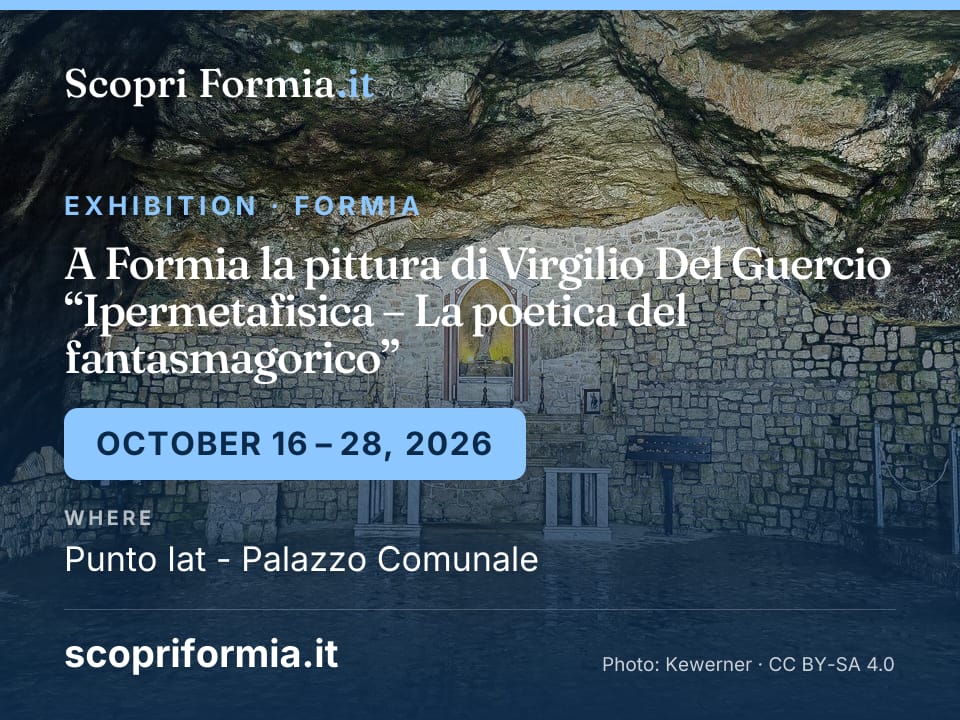
A Formia la pittura di Virgilio Del Guercio “Ipermetafisica – La poetica del fantasmagorico”
A Formia la pittura di Virgilio Del Guercio “Ipermetafisica – La poetica del fantasmagorico” is scheduled (October 16 – 28, 2026 · Punto Iat - Palazzo Comunale).
Discover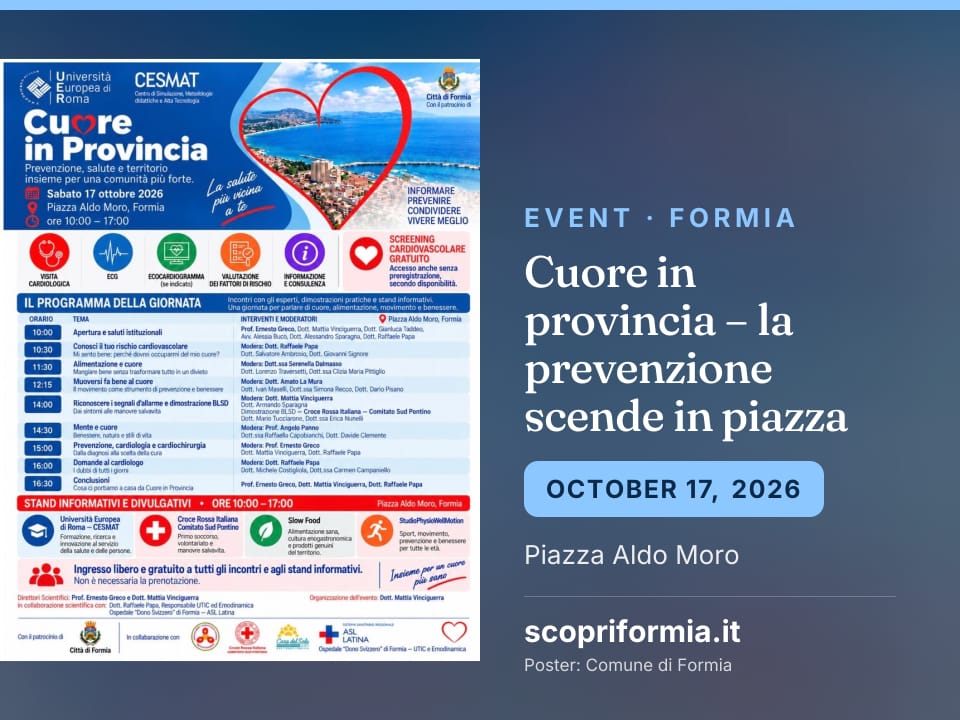
Cuore in provincia – la prevenzione scende in piazza
Cuore in provincia – la prevenzione scende in piazza is scheduled (October 17, 2026 · Piazza Aldo Moro, Formia).
Discover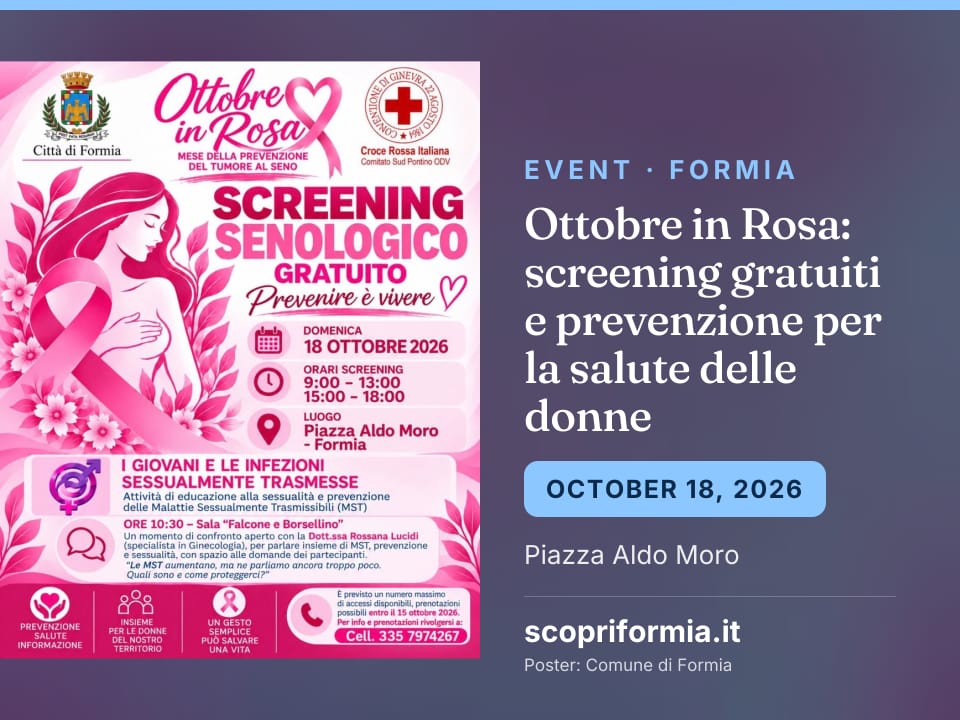
Ottobre in Rosa: screening gratuiti e prevenzione per la salute delle donne
Ottobre in Rosa: screening gratuiti e prevenzione per la salute delle donne is scheduled (October 18, 2026 · Piazza Aldo Moro, Formia).
Discover